The Lycaeus Mountain the heart of Parrashion Park
Mythology of Mount Lycaon
If you find yourself in Parrhasio Park and look towards Mount Lycaon, you might not just see a mountain.
You see a place where the ancients believed that stories of gods began.
For the Arcadians, Lycaon was not just sacred. It was the place where — according to an ancient tradition — Zeus, the father of the gods, was born.
The story goes that Rhea, to protect her child from Cronus, who devoured his children, took refuge in this isolated mountain in Arcadia. There, among the peaks and forests that today form part of the Parrassiou Park, gave birth to Zeus.
When he needed water to wash him, he hit the ground with force. Water gushed out of the earth and a river was born.
The Neda River.
Since then, Lycaon has been considered a sacred mountain.
The mountain of light
Even the name of the mountain hides a mystery.
The word Lycaon comes from the ancient root lychee, which means light — as in the words lykavges and lykofos. It is no coincidence, then, that the ancients associated this mountain with Zeus, the god of the sky and lightning. For the ancient Arcadians, Lycaon was the mountain of light.
One of the oldest sacred places in Europe
The archaeological research that continues on Mount Lycaon, within the Parrhasian Park area, has revealed something truly impressive.
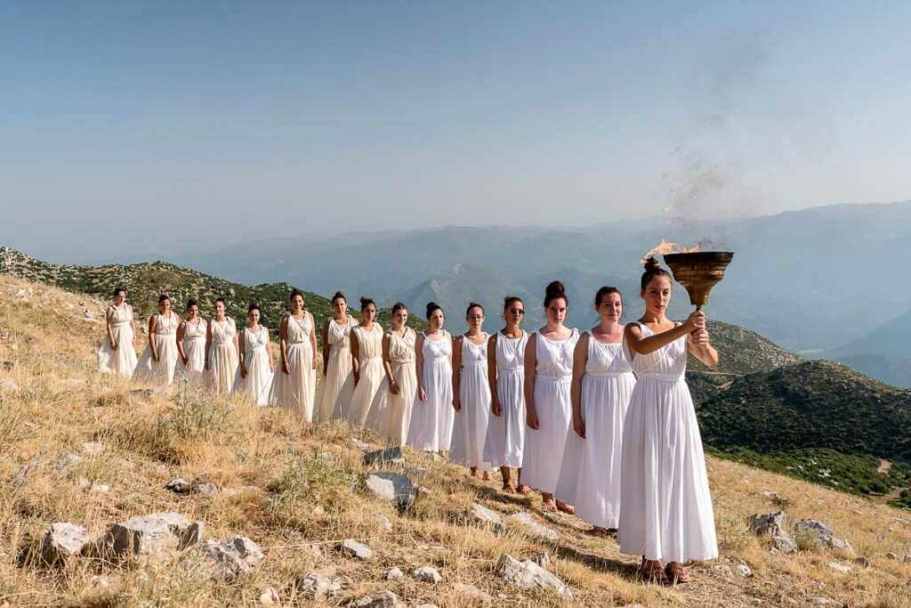
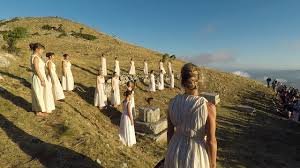
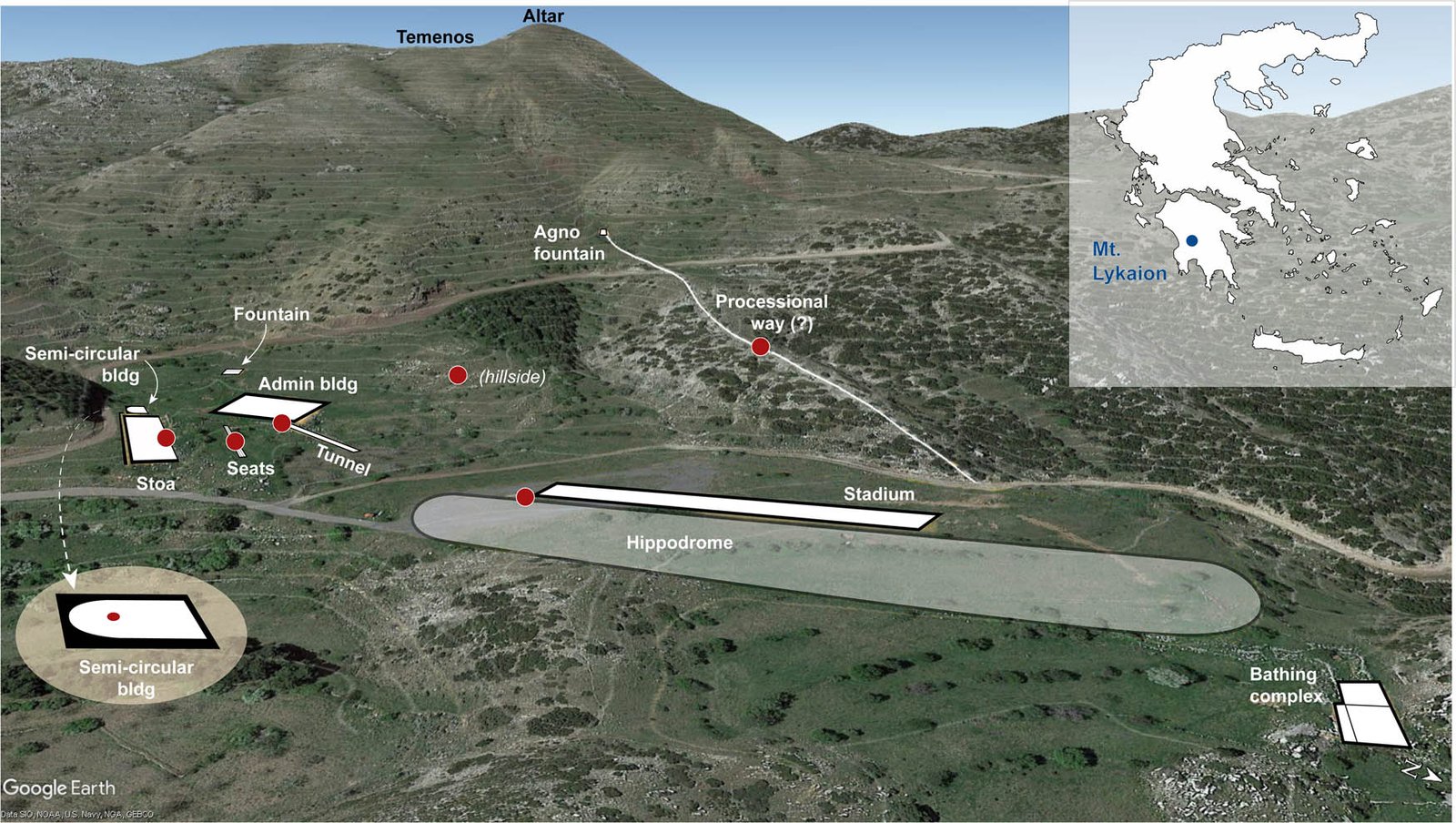
Worship at the site seems to have begun around 3000 BC. That is, long before Greek mythology as we know it took shape. At the top of the mountain there was a large altar made of ash and soil, where sacrifices were made to Zeus Lycaeus.
No temple. No marbles. Just sky, mountain and fire.
The Lycaonian Games
On the slopes of Lycaon, in the nature that today forms part of the Parrhasian Park, the Lycaonian Games.
Athletes from all over Greece gathered here to compete in games that are considered among the oldest of antiquity — perhaps even older than the Olympics.
In the area there were:
• stadium
• racetrack
• hostels
• sacred
An entire sacred landscape dedicated to Zeus.
A place full of mystery
But Lycaon also carries one of the strangest myths of antiquity. The myth of the king Lycaona. According to legend, when he tried to deceive Zeus by offering him human flesh, the god punished him by transforming him into a wolf. The word "wolf" probably comes from this myth. lycanthropy.
Thus, Lycaon became a mountain full of light... but also dark legends.
The Lyceum today
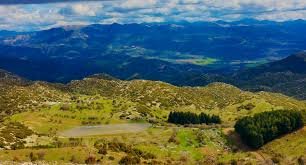
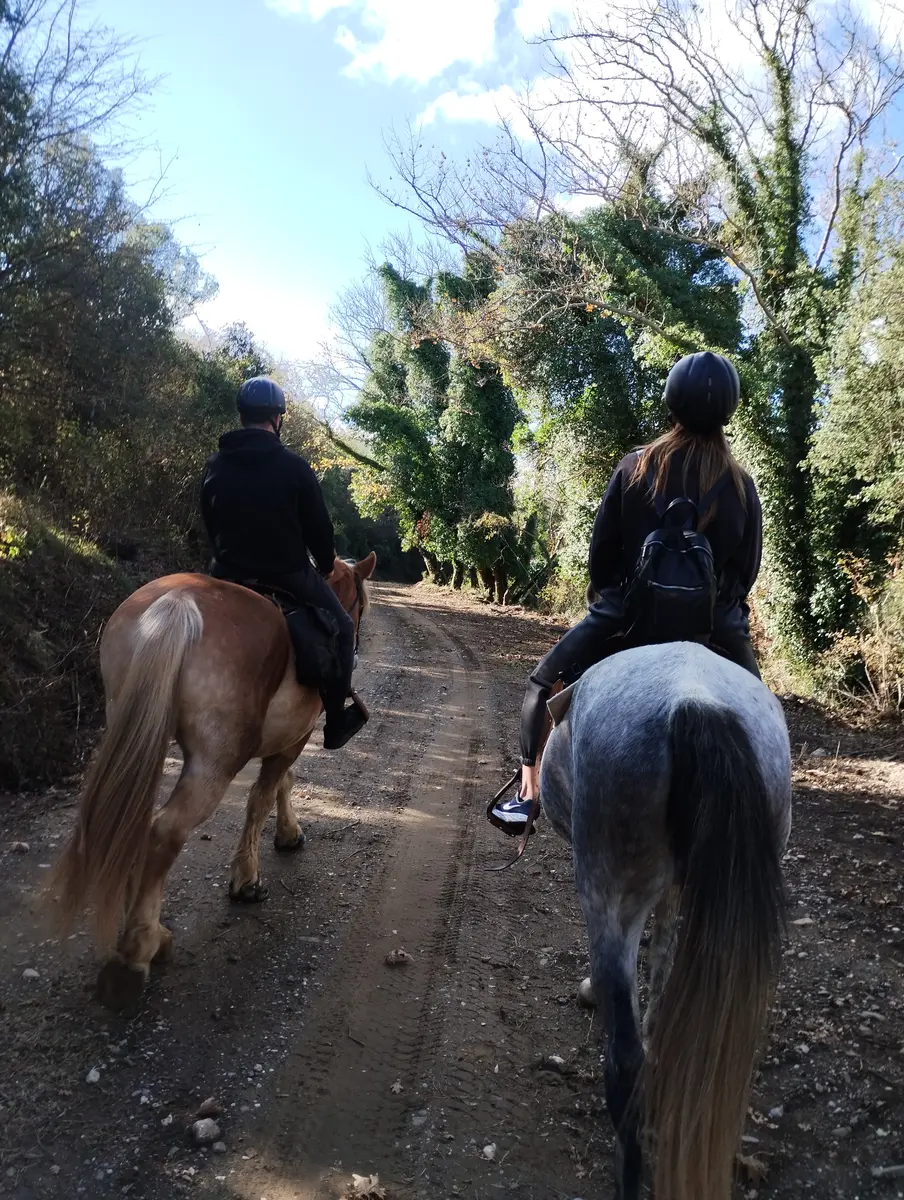
Today, Mount Lycaon is the heart of Parrassiou Park, a unique area where nature, history and mythology coexist.
Walking along its paths, you can find:
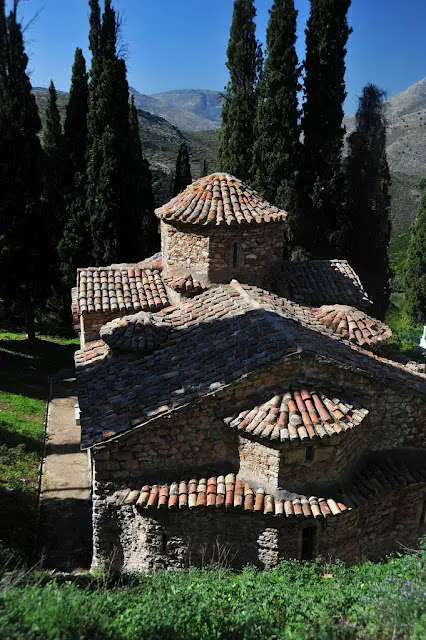
• in ancient sacred sites
• on peaks with panoramic views
• in a landscape that seems to have remained almost untouched by time
And perhaps that's the most exciting part.
In Parrasio Park, history is not only found in books.
It is around you.