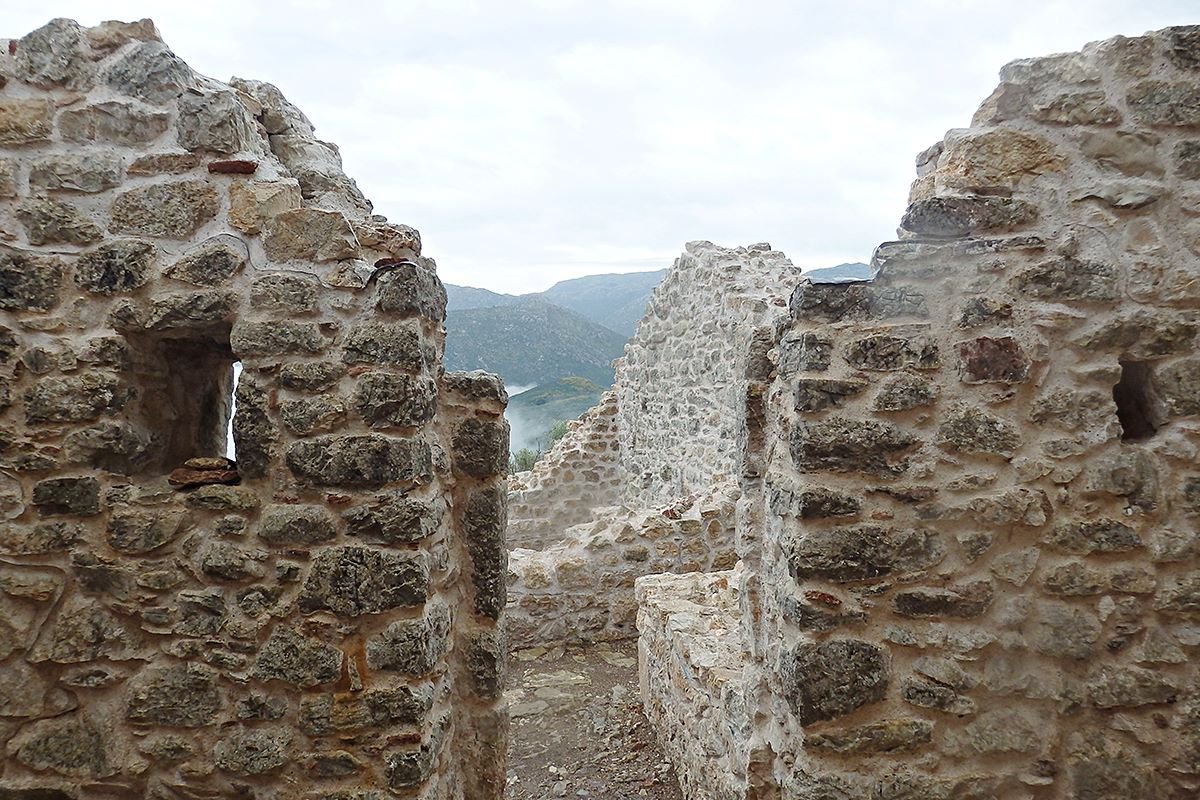
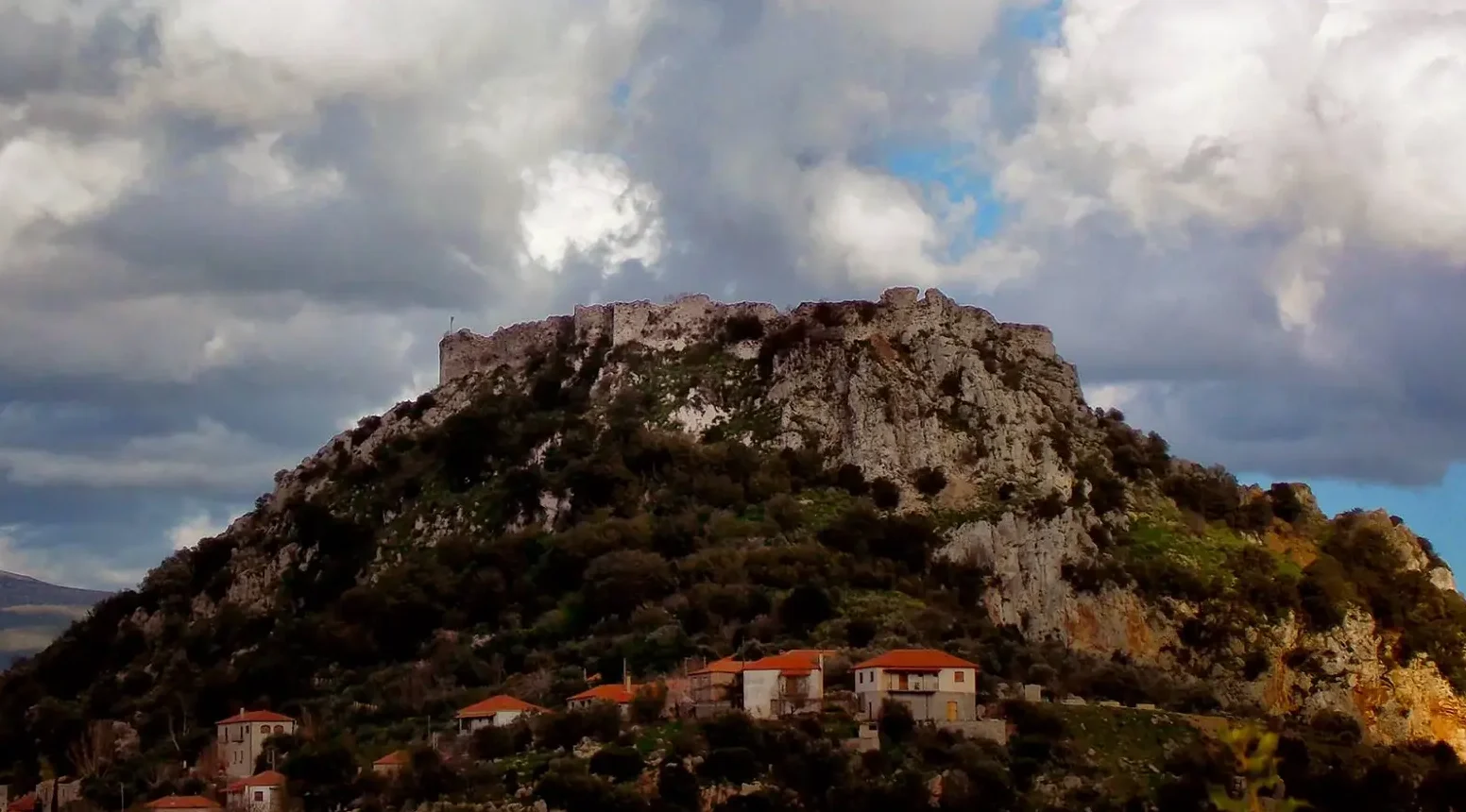
The Castle of Karytaina is one of the most emblematic medieval fortresses of the Peloponnese, a place full of history and magic that combines legends, wars and a fascinating geographical location.
Built in the 13th century by Geoffrey de Briyer, a Frankish feudal lord of the family of Bruyères, the castle became a strategic fortress during the Frankish rule in Greece. In medieval chronicles, Karytaina is even mentioned by its French name Caritainte, which shows its importance for the Principality of Achaia.
The fortress was built on the ruins of the ancient city Vrenthis, using many of the stones of the ancient walls. Its location was not accidental: from here, important passages connecting Arcadia with Messenia and Elis were controlled, as well as the trade routes that followed the Alpheus valley.
In 1320 the area passed into Byzantine rule, when it was acquired by the emperor Andronikos Palaiologos, before later passing into the hands of the Ottomans.
The history of the castle is directly linked to the Revolution of 1821. In 1826 the Theodoros Kolokotronis used the castle as a strategic base to confront Ibrahim Pasha. A shelter was also created there for women and children of the area, while the Church of Our Lady of the Castle, near the spot where Kolokotronis' house was located during the Revolution.
But the castle is not only a site of military importance. Built on top of a hill, it offers panoramic views of the Alpheus Valley and the mountains of Arcadia, creating one of the most impressive images of a medieval settlement in Greece.
Near the castle is the historic stone bridge of Karytaina, one of the most important bridges of Alfeios. The bridge, with a length that exceeds 50 meters and five unequal arches, it was for centuries a main passage connecting Andritsaina with Megalopolis and the villages of Gortynia.
The image of the bridge became particularly famous because it was depicted on the back of the old 5,000 drachma banknote, making Karytaina recognizable throughout the country.
The impressive form of the castle city has inspired many travelers and writers. The great Greek writer Nikos Kazantzakis, when he visited the area, he described Karytaina as «"Toledo of Greece"», due to its theatrical location on the hill and its medieval atmosphere.
Today, the Castle of Karytaina remains one of the most impressive historical monuments of the Peloponnese. Together with the stone bridge, the narrow streets and the stone houses of the village, it offers visitors a unique return to the past.
Walking along the paths of the castle, the visitor can feel the atmosphere of the medieval times and the struggles of the Revolution, while at the same time enjoying the wild natural beauty of the Alfeios Valley.