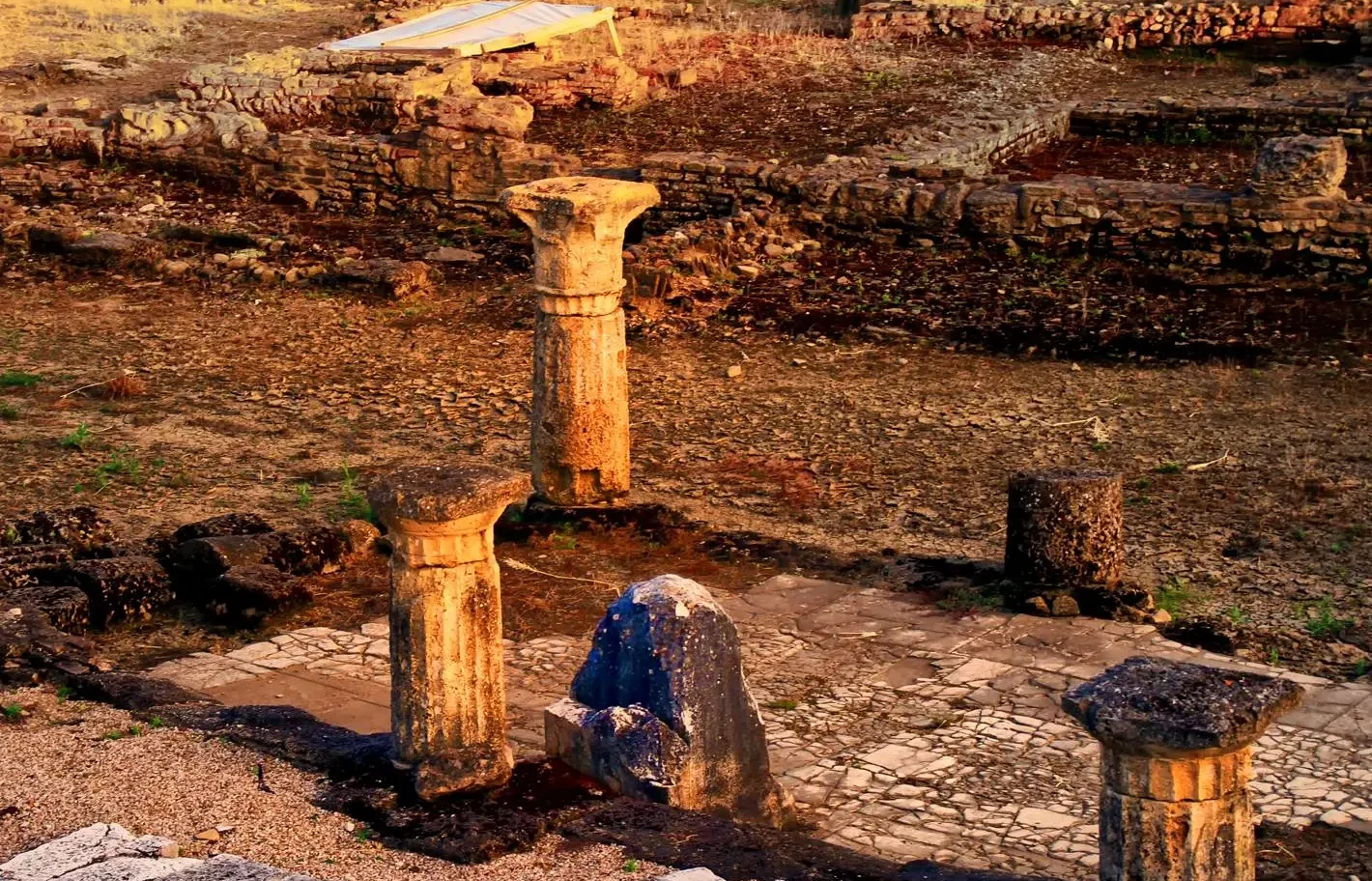
OR Ancient Olympia is one of the most important archaeological sites in Greece and the place where the Olympic games, in honor of the god Zeus. It is located in the magnificent valley of the Alpheios River, between the Alpheios and Kladeos rivers, at the foot of the lush Kronios Hill.
What makes Olympia truly unique is not just its history — but the fact that here, nature and culture coexist in a way that is difficult to find elsewhere in Greece.
🌿 Olympia in a different way: not a city, but a sanctuary in nature
Contrary to what many visitors imagine, Ancient Olympia did not begin as an organized city. It was a sacred grove, known as Altis, full of wild olive trees, plane trees and sacred altars.
Before temples and stadiums were built, there were only places of worship and the tomb of Pelops. It is this special character that gives Olympia a special energy to this day — as if it were not just an archaeological site, but something more alive.
🏛 The most important sights of Ancient Olympia
The archaeological site of Olympia includes some of the most important monuments of ancient Greece:
- THE Temple of Zeus, which housed the gold and ivory statue of Zeus, one of the Seven Wonders of Antiquity
- The Olympia Stadium, where the Olympic Games were held
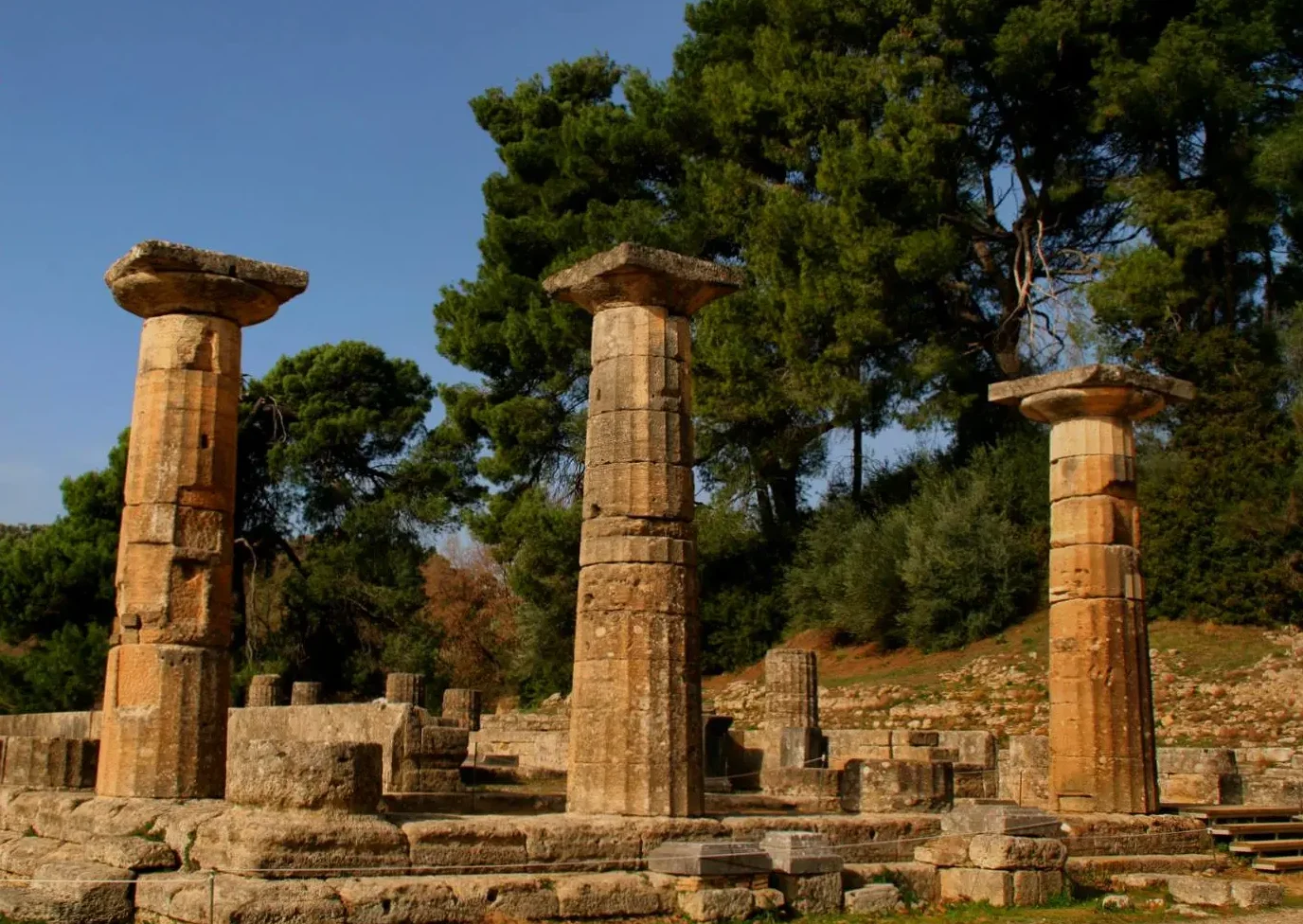
- The Heraion, dedicated to the goddess Hera
- The Archaeological Museum of Olympia, with unique exhibits such as the Hermes of Praxiteles
Here you will walk on the same paths where athletes competed for glory and honor, crowned with the sacred kotinos, an olive branch.
🕊 The Olympic Games and the Sacred Truce
The first recorded Olympic Games were held in 776 BC., but their importance went beyond sports.
During the Games, the Holy Truce — a global, by the standards of the time, peace agreement. The city-states stopped wars, allowing everyone to travel safely to Olympia.
This makes Ancient Olympia not only the cradle of sports, but also the first symbol of peace in history.
An ancient center of ideas and influence
Olympia was not just a sports venue. It was a meeting point for:
- philosophers
- artists
- politicians
Greek cities left offerings and treasures, not only for religious reasons, but also to show power and prestige. In a way, Olympia functioned as the first international center of visibility and influence.
🌍 A story lost underground
After the abolition of the Olympic Games, the 393 AD. by Emperor Theodosius I, Olympia began to decline.
Earthquakes, floods from the Alpheios and Cladeos, and landslides from the Cronos hill gradually covered the site. For centuries, Olympia was lost — buried under up to 7 meters of soil.
It was rediscovered in the 18th century and excavations continue to this day.
🔍 Little secrets that make the difference
As you explore Ancient Olympia, there are some details that most visitors don't know:
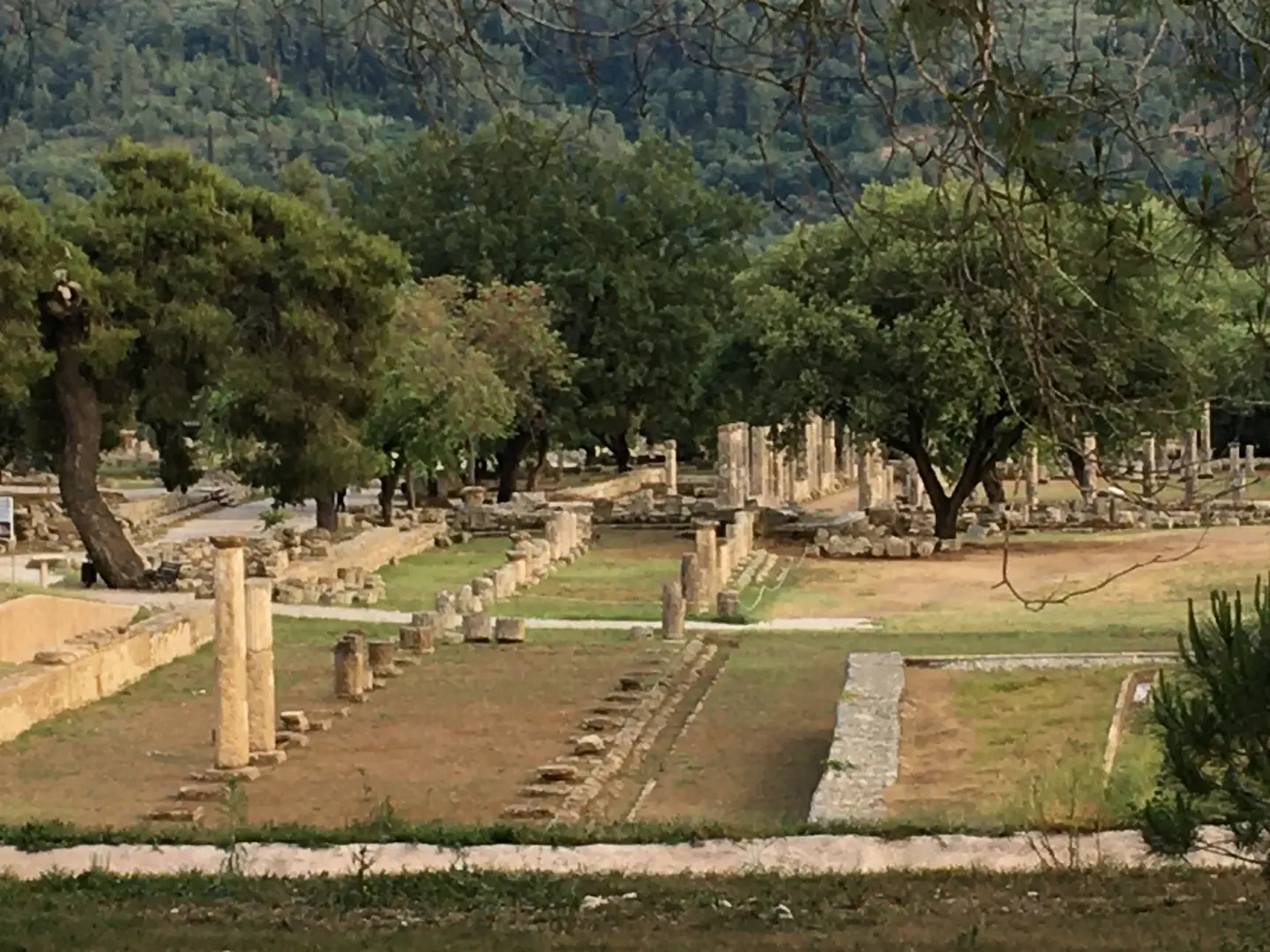
- Athletes did not train in the stadium, but in special places such as the gymnasium and the palaestra.
- In Olympia there were baths and thermal baths — a kind of ancient “wellness”
- The hippodrome, where chariot races were held, is no longer preserved today, as it was washed away by the river.
- The most impressive statue of the site, the Zeus by Phidias, no longer exists
- The area was already inhabited since the Neolithic era.
- Olympia later became a Christian settlement.
- The heart of Pierre de Coubertin, founder of the modern Olympic Games, lies here
These little stories give a completely different dimension to the experience.
Why it's worth visiting Ancient Olympia
Visiting Ancient Olympia is not just a stop at an archaeological site.
It is an experience that combines:
- history
- nature
- culture
- feeling
The light falling on the ancient monuments, the sound of the river, and the feeling of being at the point where it all began, create an experience that is difficult to describe in words.
Ancient Olympia – Ticket Prices
- April 1 – October 31:
- Whole: €12
- Reduced: €6
- November 1 – March 31:
- Whole: €6
- Reduced: €3
Ticket Validity:
- The single ticket includes: Archaeological Site of Olympia, Archaeological Museum, Museum of the History of the Olympic Games, and the Museum of Excavations of Olympia.
Free Entry:
- March 6, April 18, May 18, last weekend of September, October 28.